
8 October 2026
In Conversation With: LPV
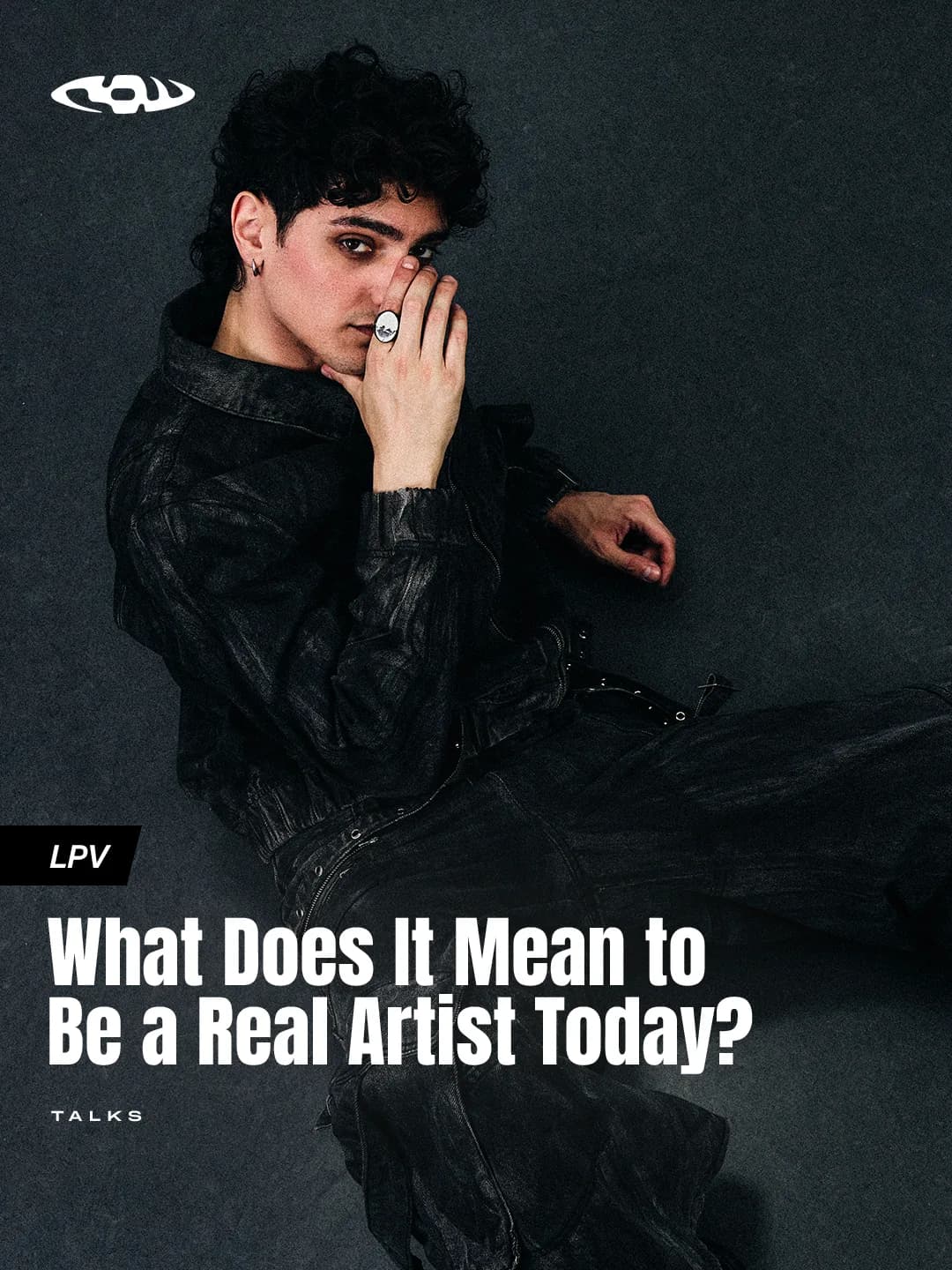
We sat down with LPV to talk about what it means to be an artist in a scene increasingly driven by content and visibility. From protecting your artistic identity to challenging the audience and knowing when to say no, LPV shares his perspective on staying true to your vision.ce and knowing when to say no, LPV shares his perspective on staying true to your vision. ‘Dub Ride’ is coming on Oct 16 on Monnom Black.
**1. What makes you personally respect another artist, regardless of their popularity, success or career level? ** Respect, to me, isn’t measured by chart positions, stream counts, or sold-out arenas, it’s measured by conviction. I deeply respect artists who possess the raw courage to present a vision that is uncompromisingly their own, regardless of medium. History doesn't remember those who comfortably fit in, it remembers the disruptors, the visionaries who looked at the world and offered an entirely distinct, unfiltered perspective. An artist who steps onto a stage or enters a studio with the bravery to be genuinely unique, even when it’s uncomfortable, holds my absolute respect.
2. Should every DJ or producer be considered an artist simply because they create or perform music, or is there something more that separates making music from truly being an artist?
Making music requires skill, but being an artist requires a soul. There is a fundamental difference between a technician who knows how to assemble a functional track or blend two records seamlessly, and an artist who uses sound as an extension of their internal world. True artistry lives in the intention, the emotional weight, and the risk. If you are merely executing a formula to satisfy a crowd or a trend, you are operating as a craftsman or an entertainer. You become an artist when the music stems from a place of necessity, when it communicates a vision that couldn't exist through any other medium.
3. Where do you draw the line between having a genuine artistic identity and simply having strong branding?
Branding and identity are undoubtedly connected in today’s ecosystem, but the hierarchy has become dangerously inverted. When an artist spends 80% of their energy engineering their image and only 20% on the actual music, the art loses its magic, it becomes a hollow product wrapped in polished packaging. Branding should be nothing more than the shadow cast by your artistic identity, it should naturally reflect the music, not dictate it. We are living in a moment that starves for genuine sonic research and fresh ideas, and that depth can only be achieved when the work itself receives 100% of your passion.
4. Do you think today’s scene sometimes rewards visibility and momentum more than creativity and artistic substance?
Undoubtedly. We live in an era dominated by algorithms designed to favor relentless output and high visibility over depth and patience. Momentum can easily be engineered with the right marketing playbook, which often creates an illusion of artistic substance. However, fast visibility usually yields disposable art. While the current system might reward surface-level engagement in the short term, true creativity creates long-term resonance. A viral moment passes in days, but genuine artistic substance builds a legacy that withstands the churn of the industry.
5. At what point does adapting to the industry become compromising your artistic identity? Should an artist be willing to lose opportunities in order to protect their vision?
Trends are fleeting by definition, but artistic integrity is timeless. Adapting becomes a compromise the second you trade your expressive necessity for temporary relevance, when you jump from genre to genre simply because "that's what works right now." When you do that, you strip away the very core of what makes your music authentic. Protecting your vision often means having the courage to say no, to turn down easy shortcuts, or to watch certain doors close in the short term. Sacrificing an immediate opportunity to safeguard your artistic soul isn't a loss, it's an investment in a career that actually means something.
6. Can you name one or a few artists who inspire you and genuinely represent your definition of what an artist should be? What is it about them that you respect?
I have immense respect for the artists who walked through the total uncertainty of the post-COVID landscape without diluting their principles or bending to whatever the scene was demanding at the moment. Instead of chasing quick fixes, they turned inward. They evolved musically, pushing their craft forward without selling out their foundational identity. Seeing artists stay grounded in their core values while continuously refining their sound is the ultimate inspiration, it proves that you can grow dynamically without losing who you are.
7. Your sound has become increasingly recognizable over the past few years. Was developing that identity something conscious, or did it emerge naturally as you evolved as a producer?
It was never a calculated blueprint, it was a fluid, ongoing process. Building a sound identity is a lot like painting a single canvas over several years, it is constantly incomplete, continuously shifting. There was never a single day where I woke up and thought, "This is my sound." Instead, it emerged naturally through endless experimentation: pushing boundaries, adding bold elements, stripping away unnecessary noise, and embracing the absurd accidents in the studio. You eventually wake up and realize that the accumulation of those choices has formed a distinct voice.
8. You’re returning to Monnom Black with Dub Ride, following Quantum Leap. How have you evolved as a producer between these two records, and what does this new release say about LPV today?
Monnom Black feels like home to me. Dax welcomed me in such a genuine way, he really discovered my potential early on, and I'm deeply grateful for that. Working alongside a professional of his caliber opens your mind and elevates your standards, the creative exchange itself is where the true value lies, with the release being the final milestone. Between Quantum Leap and Dub Ride, my evolution has been largely about subtraction. I've learned that impact often comes from stripping away the excess to let the core ideas breathe. Dub Ride shows me in a state of continuous refinement, simpler, sharper, and still evolving.
9. One of the tracks is titled “They Said, No Content, No Stage.” What’s the story behind that title? Does it reflect your own experience of what is expected from artists today?
It’s a direct critique of the cynical reality many artists face today, a phrase that captures the absurd pressure where your worth as a performer is judged by your social media output rather than your music. It speaks to that frustrating industry narrative where if you aren't constantly feeding the content machine, you don't deserve a platform. I chose that title to shed light on this exact tension. It’s a statement of resistance against a system that attempts to reduce rich artistic expression into disposable digital content.
10. Do you think part of being an artist is being willing to challenge the audience rather than simply giving them what they expect?
Absolutely. People don't buy a ticket just to hear a reproduction of what they already know, they buy a ticket to be taken on a journey. Club culture was built on the foundation of discovery, risk, and the unexpected. If people only wanted comfort and predictability, they could easily stay home and stream a pre-recorded set on SoundCloud. Our responsibility as artists on stage is to honor that culture, to respect the audience enough to challenge them, surprise them, and push them past their comfort zones.